




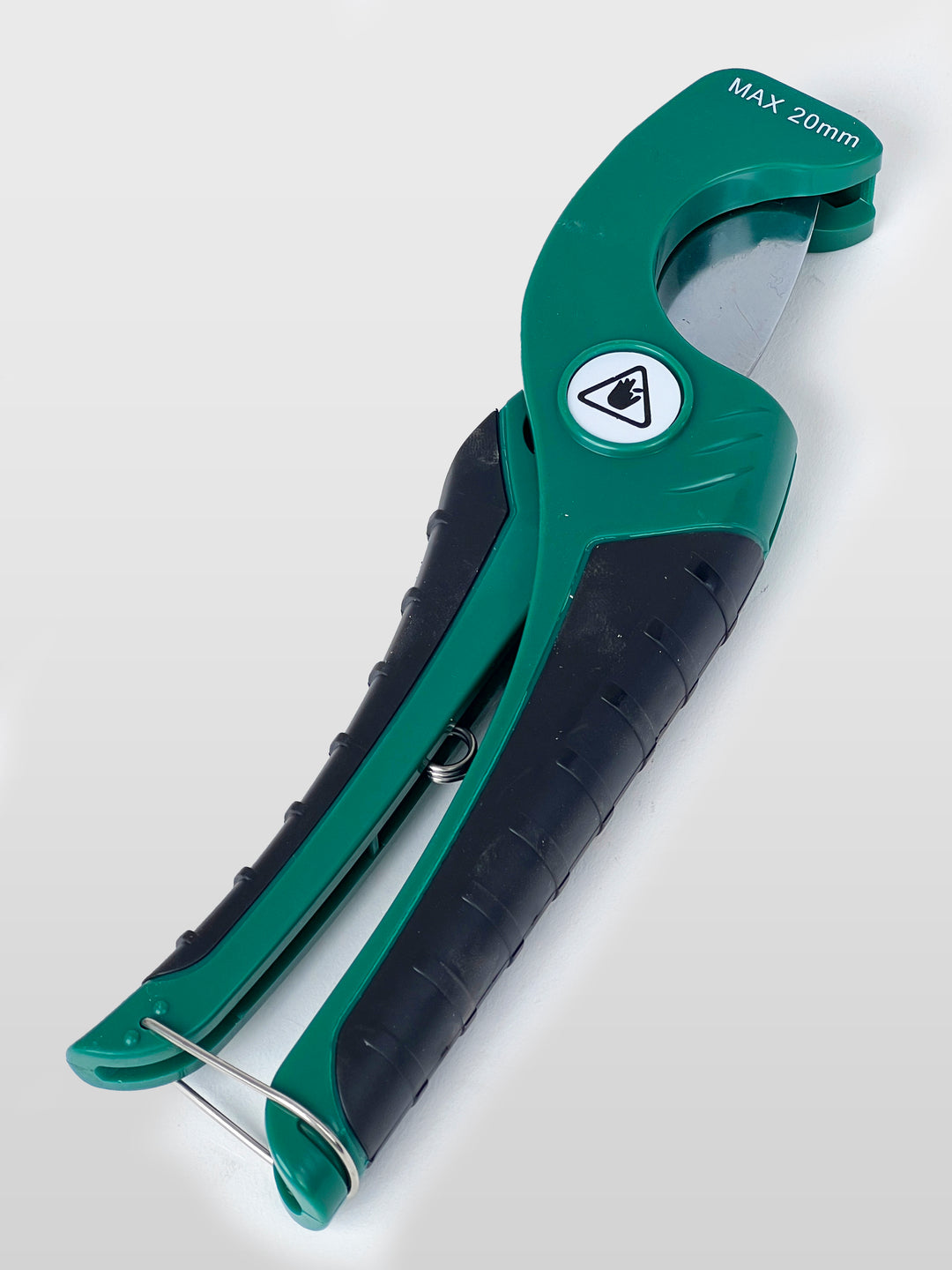
Pipe cutter for making clean, square cuts in Aquifer™ poly mainline and compatible drip irrigation tubing.
A clean cut helps fittings seat properly and makes installation, expansion, and repairs easier.
USE
Suitable for sizing new tubing or removing damaged sections before installing fittings.
Assembly instructions are available in video format only.
Aquifer™ Tunnel
Aquifer™ Tunnel
Efficient Overhead Irrigation for Tunnels
Built to Last
Aquifer Stands are guaranteed against breakage for five years. See terms

Why Growers Choose Aquifer™ Tunnel
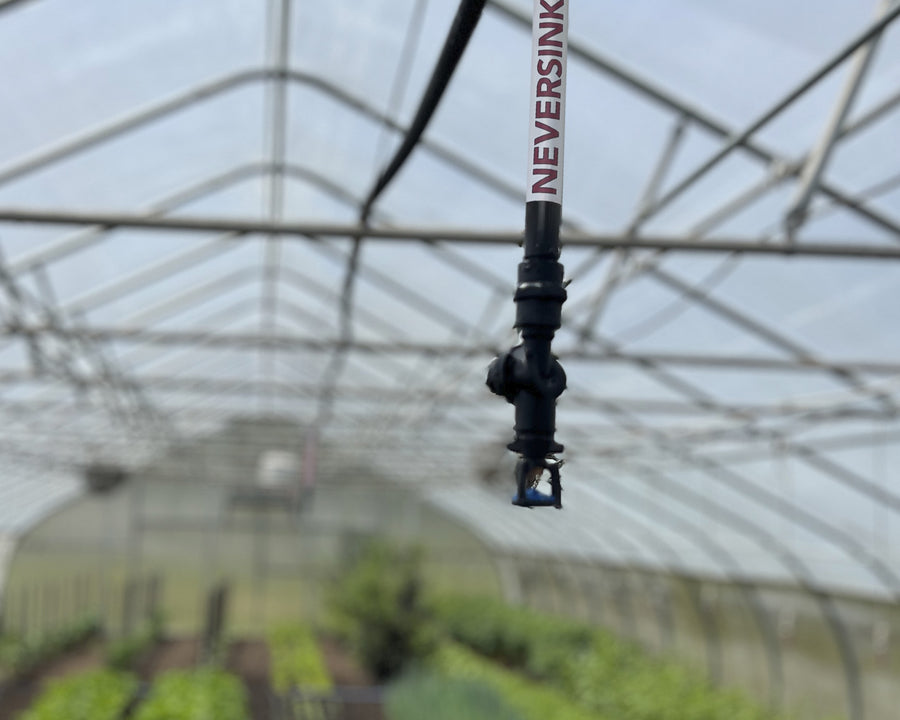
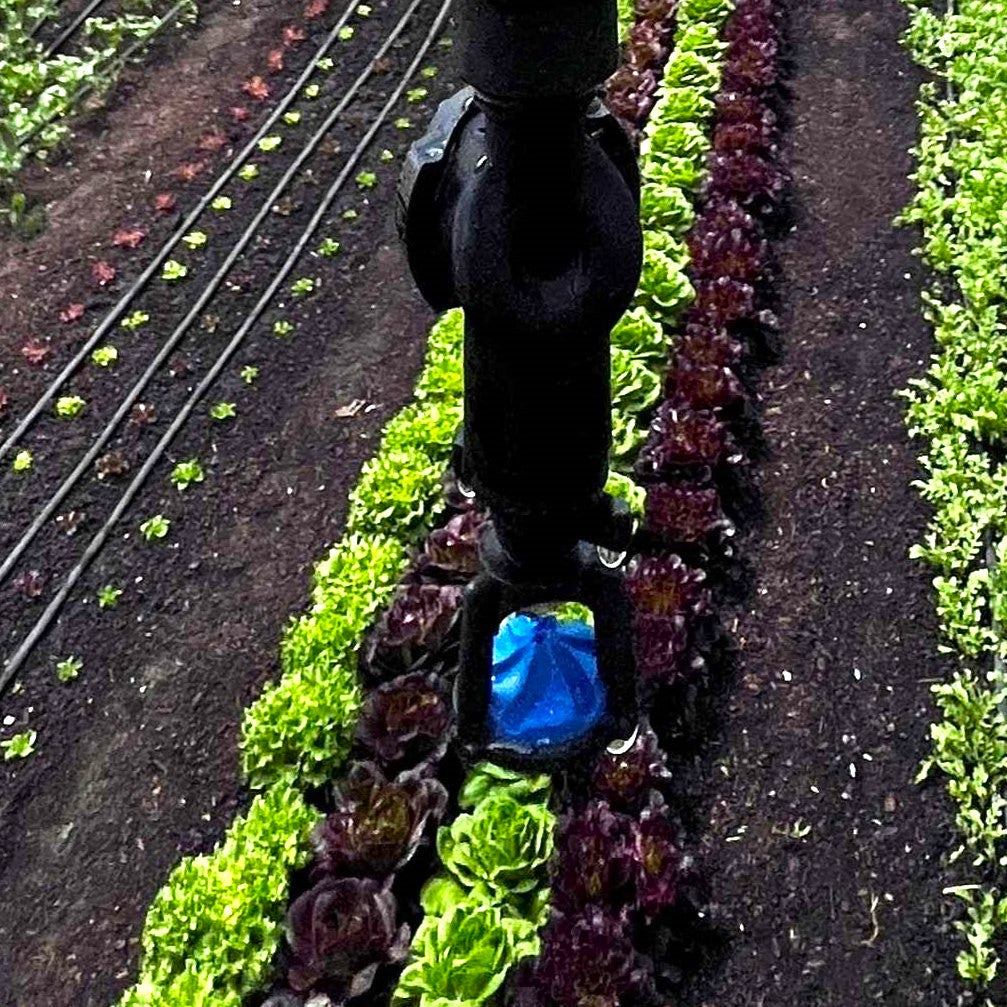
Suspended overhead watering — Inverted mini-Wobblers hang from the tunnel structure to help keep beds and pathways clear.
Flexible layouts — Arrange sprinkler locations and mainline runs around the length and width of your tunnel. Check your water source and operating pressure before deciding how many sprinklers to run at once.
Simple connections — PowerLoc fittings join compatible 3/4" poly mainline without punching holes in the pipe. Cutting the tubing to length requires a suitable cutter or knife.
Drain stops included — Every Aquifer™ Tunnel kit includes an inverted Wobbler drain stop for each sprinkler head, to help reduce residual dripping onto crops after irrigation shuts off. Replacement drain stops are available separately if needed.
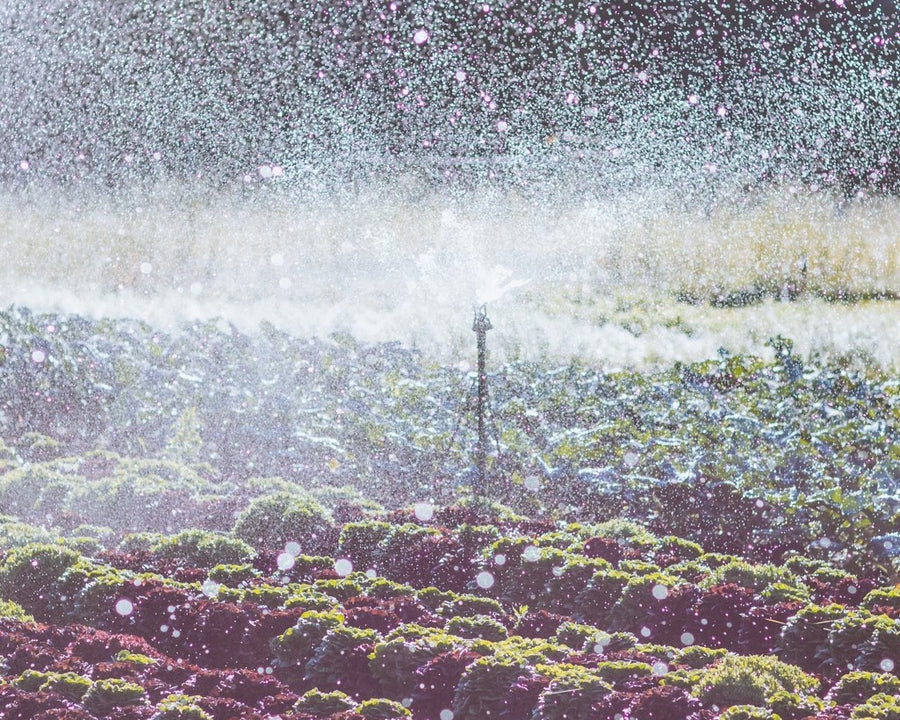
Water distribution — Properly spaced inverted mini-Wobblers can provide useful overhead coverage for germinating seeds and watering closely planted crops. Performance depends on water pressure, mounting height, spacing, and available flow.
Built for repeated use — Durable components are designed for working tunnels. Inspect fittings, sprinkler heads, and mainline periodically, and winterize when freezing conditions require it.
No Mainline Punch Tool Required
Cut and Connect the Mainline
Cut the compatible mainline tubing to length and secure the PowerLoc fittings. Follow the assembly video to mount and connect the inverted Wobbler stands.
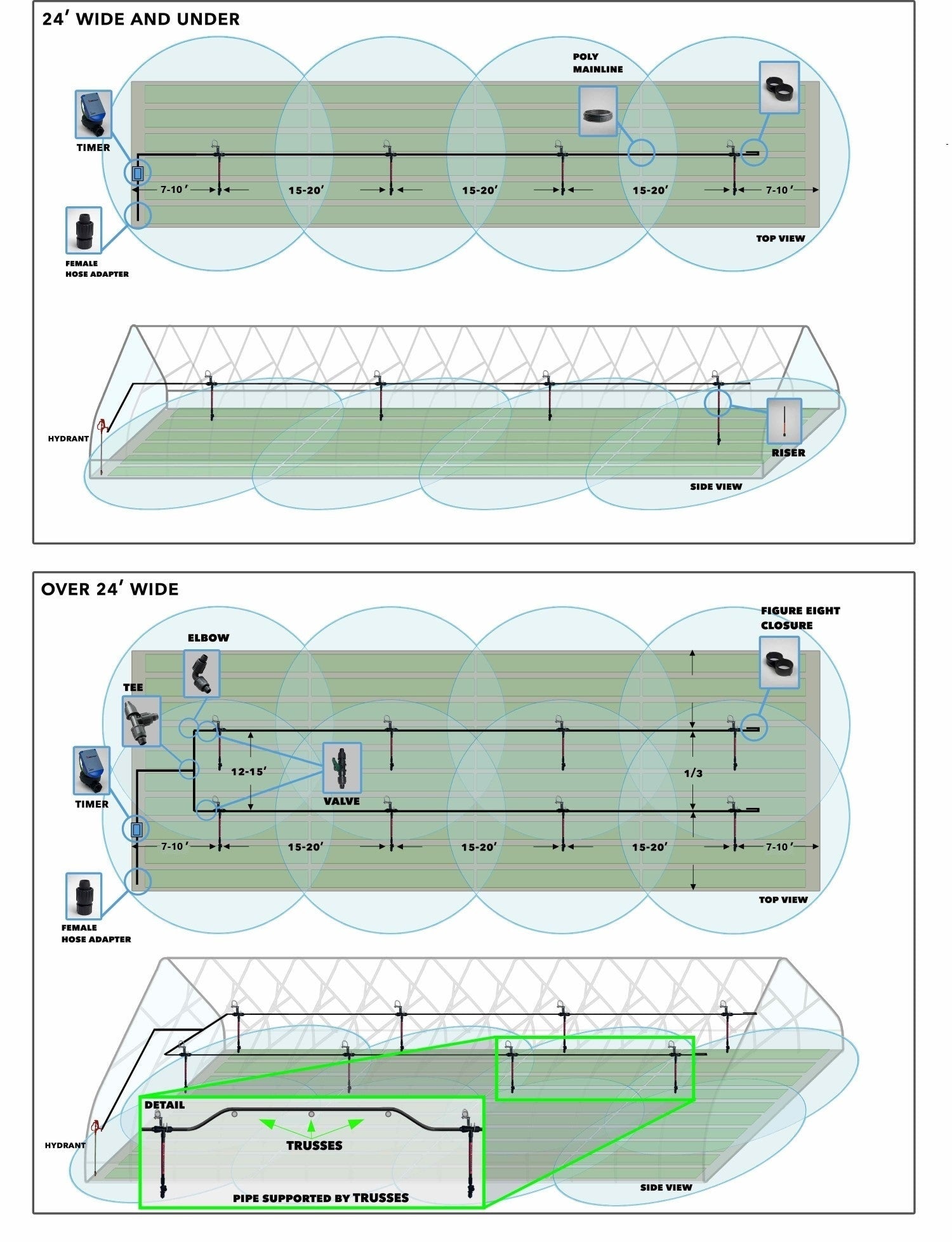
Aquifer™ Tunnel Irrigation Layout
The diagram includes optional accessories we sell, such as risers to lower the Wobbler, timers for automatic control, and fittings and valves to create watering zones. These accessories are optional and may not be necessary for your situation.
Water Flow and Pressure
Wobblers
Aquifer™ Tunnel uses Senninger inverted mini-Wobblers with beige 5/64" nozzles, designed for overhead watering inside hoop houses and caterpillar tunnels.
Approximate performance at the sprinkler head:
- 20 PSI: 0.75 gallons per minute (GPM); approximately 32 ft wetted diameter with the head mounted 6 ft above the ground.
- 25 PSI: 0.84 GPM; approximately 32.5 ft wetted diameter with the head mounted 6 ft above the ground.
Sprinkler spacing, overlapping spray patterns, mounting height, water-source location, and pressure losses all affect the best tunnel layout. Check the sample Tunnel Irrigation Layout diagrams for configuration ideas.
Pressure regulation: Most installations do not need a separate regulator at every sprinkler. For situations where precise distribution and application rates matter, an optional 20-PSI MPR regulator is available for inverted mini-Wobbler stands. Follow the applicable assembly guidance for installation. This individual-head regulator does not replace a source-pressure regulator. The Aquifer™ PowerLoc mainline fittings have a rated working pressure of 60 PSI; if supply pressure exceeds the lowest-rated component, reduce it at the source before the mainline.
Check Your Water Flow
Measure the available water flow at the connection you will use for your tunnel. Fill a five-gallon bucket to the five-gallon mark and time the fill with a stopwatch.
GPM = 300 ÷ fill time in seconds. For example, a five-gallon bucket that fills in 30 seconds indicates approximately 10 GPM at that connection under test conditions.
At 20 PSI, four inverted mini-Wobblers use approximately 3 GPM together, while 20 use approximately 15 GPM. This illustrates simultaneous flow demand, not how many sprinklers must be installed across all tunnels. Water in zones if necessary.
Important: Bucket flow does not tell you whether sufficient pressure will remain at the sprinklers when they are running. Check operating pressure, tubing length, elevations, and other water demands before finalizing your layout.
Education
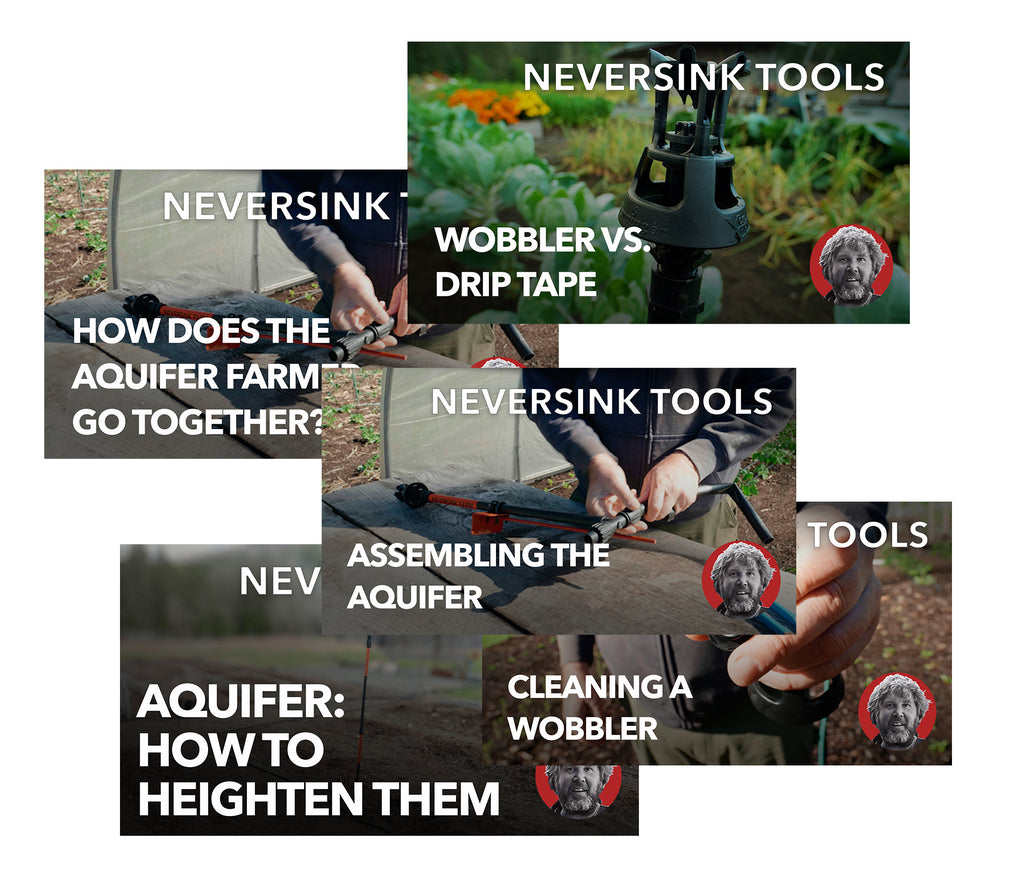
Videos on Irrigation
Visit the Neversink Farm Aquifer video playlist for tunnel setup guidance, demonstrations, and irrigation layout ideas.
Aquifer™ Tunnel and Drip: Choosing Your Approach
Bed-Surface Coverage
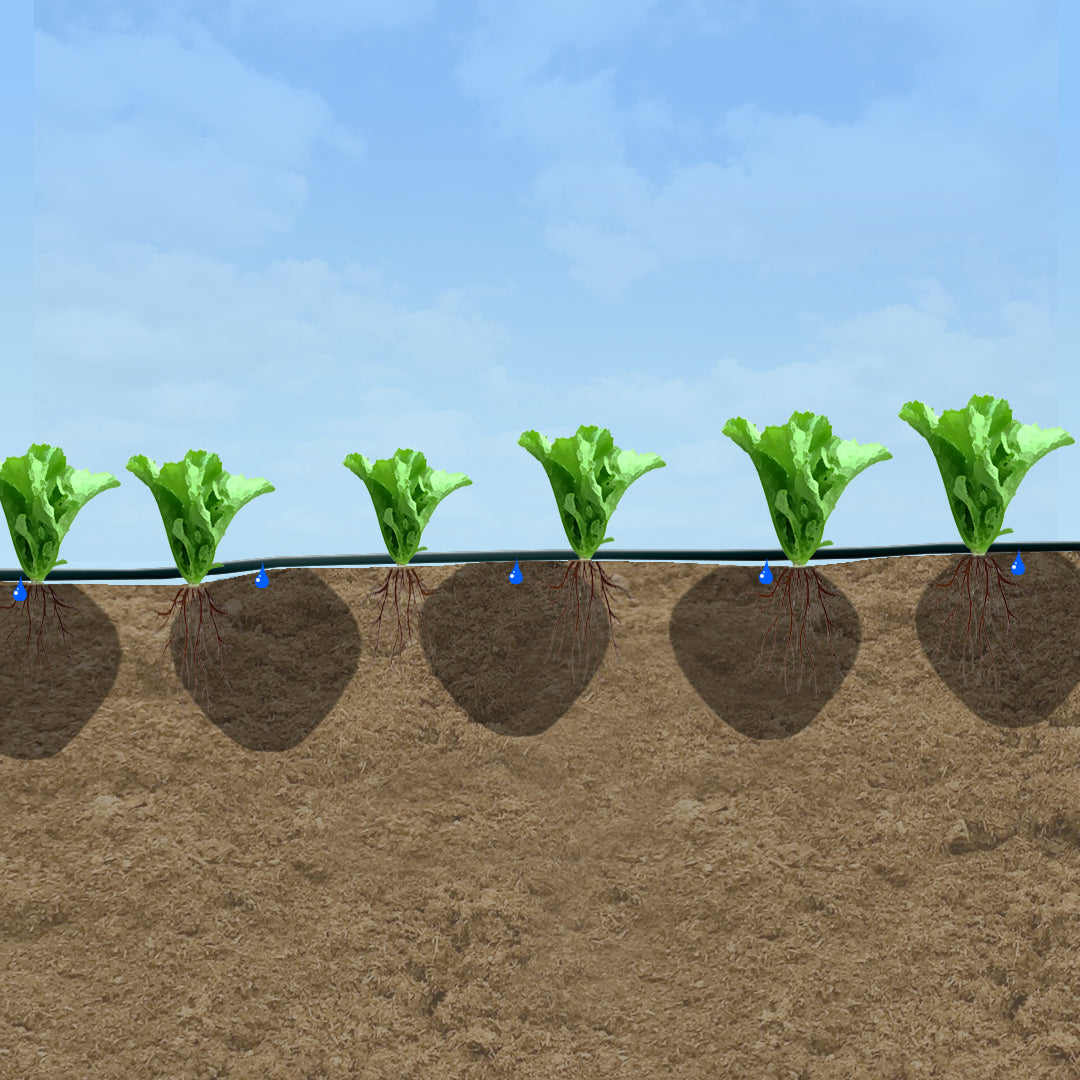
Aquifer™ inverted Wobblers distribute water overhead across the bed surface, which can be helpful for germination and closely spaced crops. Drip tape applies water closer to emitters and remains useful for crops and situations suited to targeted irrigation.
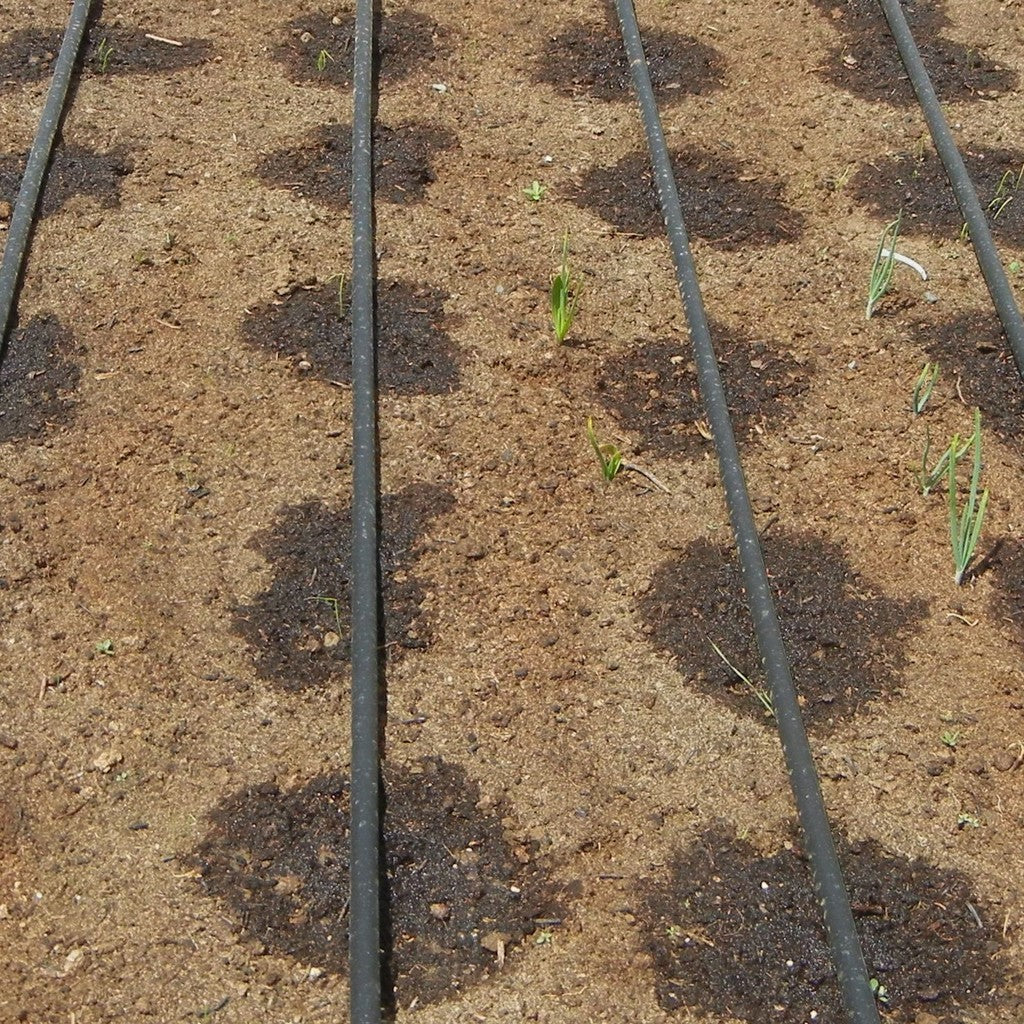
Choose the Watering Schedule
Overhead irrigation can water tunnel beds without placing drip tape on every crop row. Actual irrigation time depends on water flow, pressure, sprinkler spacing, soil, crop needs, and weather. Irrigate at a time that gives foliage an opportunity to dry when appropriate.
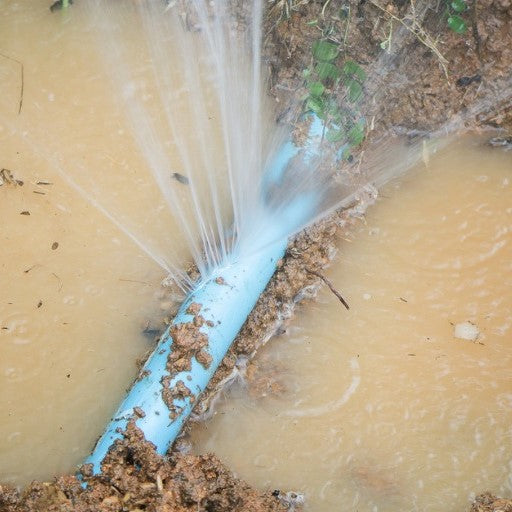
Keep the Tunnel Workable
Suspended stands leave beds and pathways more accessible for routine work. The system still needs occasional inspection, cleaning as needed, and proper drainage or winterization when freezing weather is expected.