




How to Choose a Seedling Tray Size: 50, 72, 128, 200, or 288 Cells


Choosing a seedling tray is really a choice about how much growing-media volume each plant gets before transplanting. Lower cell counts give each plant more space. Higher cell counts fit more seedlings into the same propagation footprint.
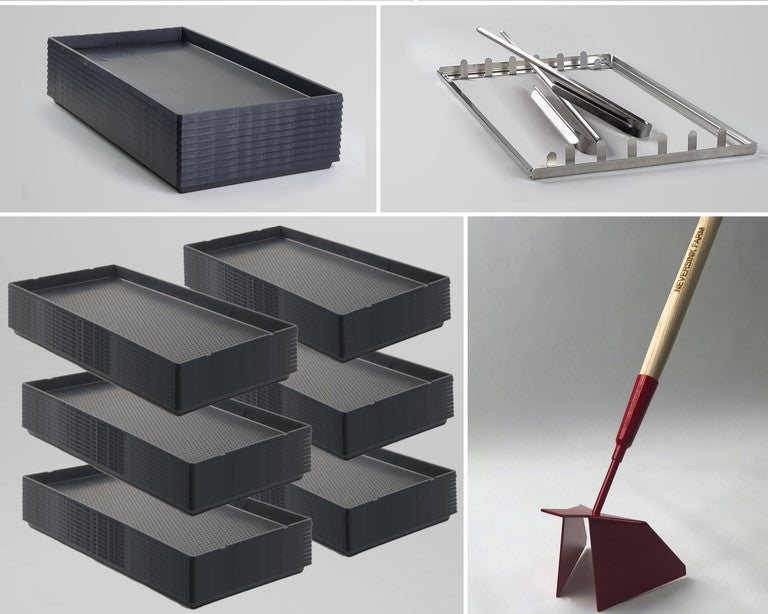
The current Winstrip® tray lineup includes 50, 72, 128, 200, and 288-cell formats, with a separate 72 Deep option for growers who want additional depth.
50-cell trays
Use a 50-cell tray when you want a larger plug, expect seedlings to remain in propagation longer, or are growing crops that benefit from more root and media volume before transplanting.
This format trades plant count per tray for a larger individual cell.
72-cell trays
A 72-cell tray is a useful middle ground for many transplant crops. It gives substantially more root volume than high-density formats while still keeping propagation space efficient.
72 Deep trays
The 72 Deep is for situations where added cell depth is useful. It is a separate format from the standard 72 and should be treated as its own propagation choice rather than simply another cell count.
If you use a humidity dome with the 72 Deep, use the compatible High Dome; the Standard Dome is not designed for the 72 Deep.
128-cell trays
A 128-cell tray increases plant count while still giving seedlings more room than very high-density formats. It can be a practical step between general-purpose trays and dense propagation.
200-cell trays
A 200-cell tray is useful when propagation-space efficiency matters and the crop does not need to remain in the tray for a long period before transplanting.
288-cell trays
The 288 is the highest-density standard Winstrip format. It is especially useful for very small starts, rapid turnover, or workflows where seedlings will be potted on into a larger cell.
Neversink also uses the 288 format in the Broadcast and Pop method for tiny or difficult-to-germinate seeds.
Four questions make the choice easier
- How large will the seedling be at transplanting? Larger plants generally need more cell volume.
- How long will it stay in the tray? Longer nursery time usually favors a larger cell.
- How much propagation space do you have? Higher cell counts increase plants per bench or chamber load.
- Will you pot on? If a small starter cell is only the first step, a high-density tray can be extremely efficient.
There is no single best cell count
The best tray is the one that matches your crop and schedule. A 50-cell and a 288-cell Winstrip can both air prune effectively even though their cell sizes are very different. Cell count determines production density and root volume; the air-pruning function comes from how the cell itself is engineered.
Related growing guides: how air pruning works · starting tiny seeds in a 288-cell tray.