




Broadfork vs. Tiller: Which Tool Does Your Bed Need?

A broadfork and a tiller are both used in bed preparation, but they do very different jobs. Choosing between them starts with deciding whether the soil needs deep loosening or shallow surface preparation.
What a broadfork does

A broadfork works below the surface. The tines enter the bed and the handles are pulled back enough to lift and crack the soil. The goal is to loosen and aerate while leaving soil layers largely in place.
This makes a broadfork useful when beds are compacted, when roots need more air space, or when you want deep loosening without turning the bed over.
What a tilther does

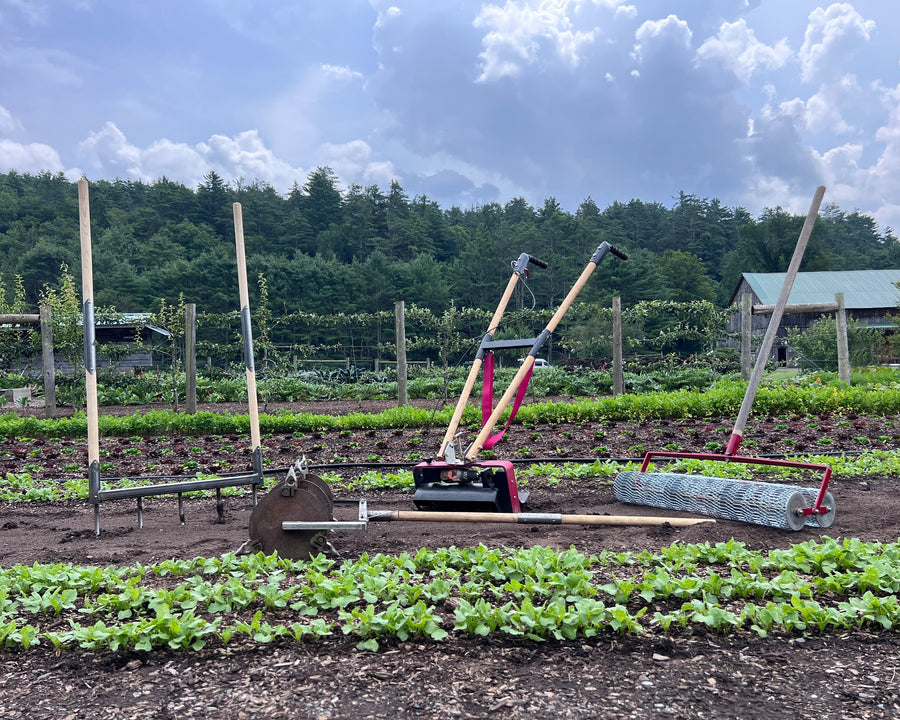
A tilther works much closer to the surface. It is used to prepare and finish the top of a bed for seeding or transplanting. It can break up surface residue and create a finer seedbed, but it is not a substitute for deep loosening when the soil profile itself is compacted.
See the Iconoclast Pro Tilther, and for more background read What Is a Tilther and Do I Need One for My Market Farm?.
Many farms use both
These tools are complementary. A grower may broadfork first when a bed needs deeper aeration, then use a tilther to finish the upper layer before planting.
Which one should you reach for?
- Deep compaction or poor aeration: broadfork.
- Routine loosening of permanent beds: broadfork.
- Fine surface preparation before seeding: tilther.
- Breaking up the top layer after amendments: tilther.
- A bed that needs both deep loosening and a finished seedbed: use both in sequence.
For broadfork options, compare The GOAT™ and the Billy GOAT™ Broad Fork.