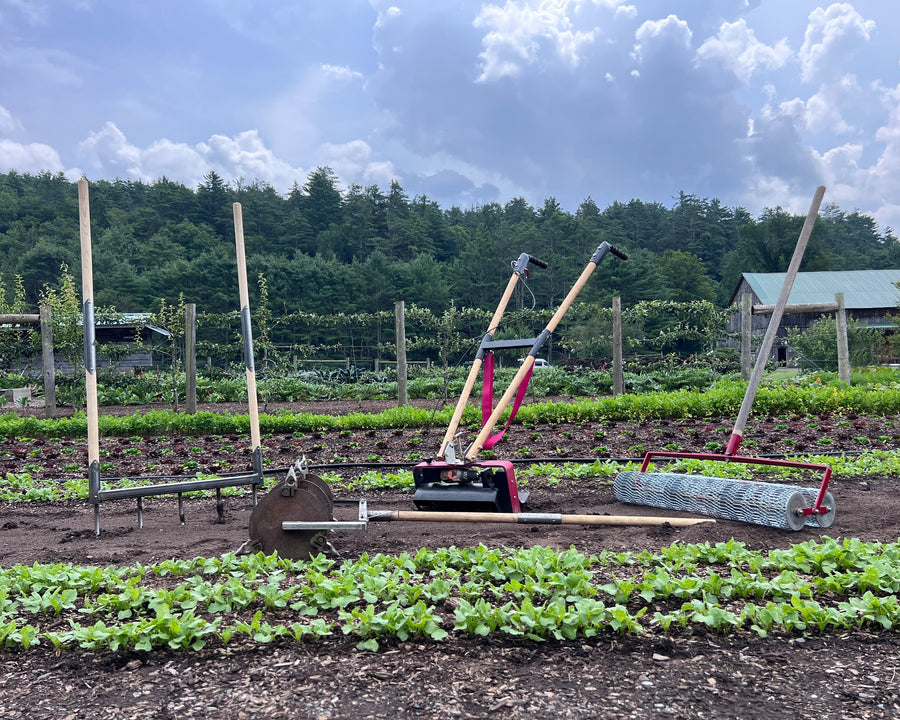






Preparing beds for planting comes down to choosing the right tool—and for many growers, the debate is between the broadfork and the tilther . Both are designed to improve soil health and prepare for planting—but they serve different purposes. If you’re wondering which tool to invest in (or whether you need both), here’s a breakdown to help you decide.
Broadforking: Deep Aeration Without Disturbance
A broadfork is a manual tool with long, sturdy tines that you step into the soil to gently lift and crack the surface. This action creates deep channels that let air, water, and nutrients penetrate, encouraging strong root systems and healthier soil biology.
Best for: Breaking up and aerating compacted soil- especially useful for heavy clay soils.
Strengths: Preserves soil structure, promotes deep aeration, inexpensive, and low-maintenance.
Pro tip 💡: Broadforking before adding amendments helps them reach deeper into the soil profile.

Tilthing: Incorporating Amendments and Smoothing Beds
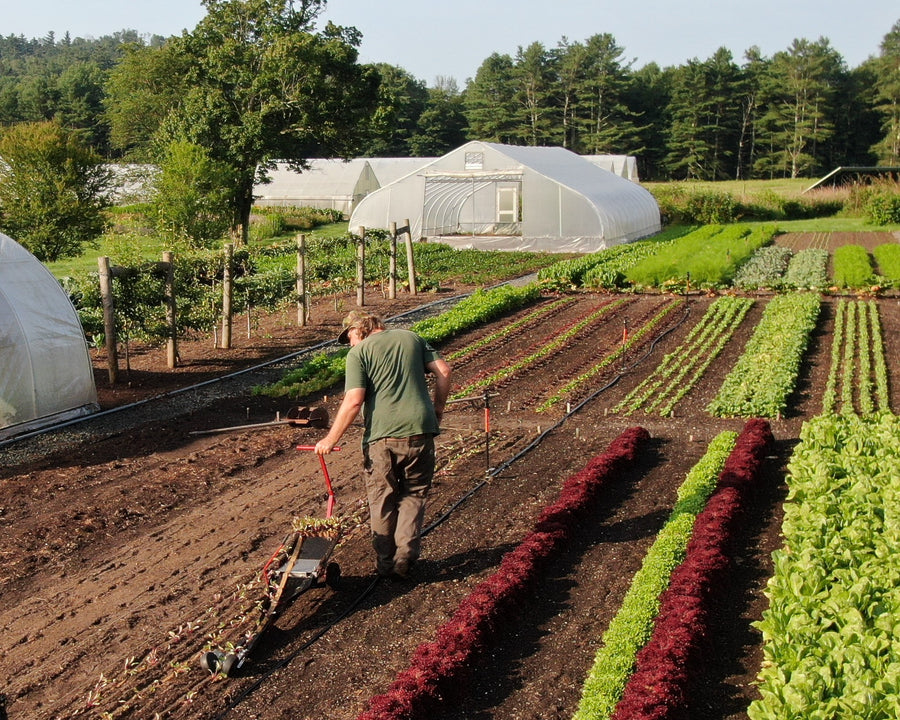
A tilther is a lightweight, mechanical tool designed to work the top few inches of soil. Its rotating tines blend compost and amendments into the surface, creating a smooth seedbed for planting.
Best for: Efficient soil prep in larger gardens or high-rotation beds.
Strengths: Saves labor, mixes organic matter evenly, and creates smooth planting surfaces.
Pro tip 💡: Tilthing is ideal after spreading compost or fertilizer—it incorporates amendments efficiently without deep disruption.

Do You Need Both?
Think of these tools as complementary rather than competing . The broadfork prepares the soil by opening it up, while the tilther refines the top layer and mixes in nutrients.
A common approach is to:
Broadfork first → Deeply aerates and creates pathways for roots and nutrients.
Tilther second → Blends amendments into the topsoil and preps the bed for seeding.
Together, they give you a soil environment that’s both loose and nutrient-rich, setting the stage for strong, healthy crops.

Final Thoughts: Better Together
Having both tools on hand gives you flexibility no matter the soil conditions. Even better, they work beautifully together. Start with the broadfork to open up the soil and create deep channels where air, water, and amendments can move freely. Once you’ve spread compost or other nutrients, follow with the tilther to blend everything into the top layer and smooth out the bed. The broadfork handles the deep work, the tilther refines the surface—and together they set the stage for strong, healthy growth.